

Powder skiing the La Sportiva Tempos. Photo: Roo Smith
“As much fun as you can have on skis” is a note I scribbled in my pocket notebook the first time I took a pair of 4FRNT Hojis into deep, steep powder. Big skis in stacked powder, there’s just nothing else like it. If that’s not what backcountry skiers are chasing, I don’t know what is.
Then last season I dropped into a deep, steep powder run in Chamonix basking in a late afternoon glow. I slashed into huge, deep turns at full speed. “That was the best run of my life” I screamed at my three partners when I got to the bottom. Yet I was on skinny touring skis. The conditions were just that good. Not the skis I pictured on my feet during the greatest run of my life even if they saved my legs on the skin track all day.
There are some exceptional skis out there for us to choose from. They’re the piece of gear we obsess over more than any other; the tools with which we connect with and to our beloved medium. Our inevitable lifelong journey is to find the greatest skis for when conditions and line choice align for the greatest run of all time. Thankfully the journey is enjoyable.
So every season we ask, “ what’s the best touring ski?”
Well, there isn’t one. Still, skiers I know and respect claim they’ve found the holy grail of ski touring. I’ve heard them claim the 4FRNT Renegade, the Salomon QST Echo, the DPS Pagoda Tour CFL 105, the 4FRNT Nevar (okay that might have been me), and others.
If we spent as much time skiing as we did hashing out ski minutiae, we’d be a lot faster on the skin track. But, man, do we like talking about skis. Hence this long winded ski touring ski guide.
Backcountry Ski Categories
Even this seemingly simple task will draw some scoffs depending on where we break the categories. Heck, some skiers will probably disagree with the units of measurements. For simplicity, we’ll break it down by waist width since that’s most common among manufacturers.
- >80mm: Basically Skimo. Skinny ski diehards might freak that we’re lumping them in with the skimo racers among us. But if you’re skiing something skinnier than 80cm underfoot, you’re probably already used to some heckling from your ski partners. We’re leaving these skis out of the guide until someone gives a really good reason to reconsider. We just don’t use them much aside from racing and traversing. And at that point the lack of weight is the most important factor.
- 81mm – 95mm: Ski Mountaineering and Light-n’-fast backcountry. These are the skis you’ll want on the longest days, the technical un-powdered descents, and for your ultra-light 2-buckle touring boots. If you live in powder havens like Jackson Hole, maybe you don’t even need a pair of these. But this is the category Colorado skiers like me are often bringing to the steeper lines requiring solid edge bite.
- 95mm – 105mm: The Daily Driver Backcountry ski. Most backcountry skiers pushing a 1-ski quiver will be piloting a pair of skis in this category. They’re ideally light, versatile, and nimble. This guide is stuffed with them because that’s what we’re, uh, driving daily. These skis cover a lot of ground, from hardpack to corn to powder.
- 106mm – 112mm: Big Mountain Skis. Soft snow skis with big rockers that excel in powder but usually offer better hard snow performance than powder skis. Skiers in very powdery zones might consider these a daily driver.
- 113mm+: Powder Skis. The skis we want to be riding because it means the snow is probably somewhere between good and great.
Ski Length For Backcountry Skiing
Ski length can have as much impact on a ski’s character as its width. I love long skis. They’re stable and floaty. But they’re heavier and they also tend to require more boot to drive them from a leverage standpoint. Shorter skis are easier to ski, quicker to turn, and lighter.
I’m 185cm tall, 195lbs. Usually I’ll grab a brand’s longest ski and call it good — that’s usually in the 185cm-191cm range. That usually also means that I’m stuck with a meaty three or four buckle boot to feel fully in control. The grams add up fast, especially on the last skin track of the day. My 191cm 4FRNT Hoji/four buckle boot setup is beefy.
You’ll catch me downsizing all the time, including the Tempo and V-Werks Rise 99 below, because then I can swap in a super light 2-buckle ski touring boot like the La Sportiva Kilo and drop literal pounds from each foot. I’ll usually aim for one size below my height as a shorthand, usually in the 176cm – 181cm range. It’s been the sweet spot for light boots.
Some skiers (and many Euros, apparently) take it one step further and downsize another notch for even more ease, precision, and weight savings. I’ve personally found the fun factor decline along with it. Looking at you again, skimo skis gathering dust in my garage.
The Test
I won’t pretend we’ve skied every set of sticks out there. Instead consider this a rundown of some of the skis we’ve been on over the last few seasons that we’d genuinely recommend to a friend (unless otherwise noted).
Let me save you the suspicion – none of the companies in this guide paid to get on this list. Wildsnow may earn a small (And I do mean small) commission from link clicks to keep the lights on. The authors are not affiliated with, sponsored by, or compensated by any of these brands, though the skis were mostly provided free of charge for testing purposes.
Our Favorite Touring Skis for 2025-2026

Armada Locator 104
Very light edge-first real mountain skis
Dimensions: 132-104-123mm
Turn Radius: 23m
Sizes: 162, 170, 178, 186cm
Profile: Tip rocker, camber
Core: Caruba w/ Carbon Reinforcement
Weight: 1,450g (178cm)
If I had a nickel for every ski that surprised me this year, I’d have almost a quarter. I’m a little bit late to the game with Armada’s now three-seasons-old Locator 104 skis, but the fresh top sheets and seemingly vintage profile had me intrigued. The 186cm Locator 104s have quickly filled a niche in my ski quiver, but probably not the one you or I expected.
Right away you notice the Locator’s lack of weight. They’re feathery for such big skis. They didn’t twist like lightweight floppy noodles. They actually bit like they meant business. The long effective edge, camber, and torsional strength made them feel reliable and sturdy while pushing into deep turns. But they weren’t like a pair of freight trains either – the lightweight and poppy core made them easy to release and slashy.
In choppier, rougher snow they brought a more business-first character. They’re far from sluggish, but they feel relatively planted. I wasn’t bouncing and blasting through everything like I might be on more heavily rockered tips. It felt more like composed slicing and driving, enhanced by the tapered tips that cut through chop without bouncing or hooking. The flip side is that they aren’t the floatiest in powder despite their width.
The Locator 104s measure in at 104mm underfoot. Combined with 132mm shovels, 123mm tails, they come with a turn radius of 23m. A heavily tapered tip contrasts with a fairly mellow tip rocker, which then yields to a moderate camber. They have a slight upkick at the tail, but I wouldn’t call it a tail rocker. There’s a lot less rocker in the entire ski than I expected when they showed up at my house. Instead you get a long, sturdy effective edge.
The Locators come with a sturdy core composed of Caruba wood with carbon reinforcement. They’re pretty stiff throughout, but maybe a hair softer in the shovels. According to Armada, a Titanal rubber sandwich in the mounting plate reduces vibrations even if it’s subtle. A hearty sidewall down most of the ski ties it all together. There’s a lot in there, and yet Armada managed to trim the weight to a very impressive-for-the-width 1,550g in the 186 length (1,450g in 178cm).
The Locators are what you get when you mash together a long effective edge and a stiff, poppy core. They reward skiers with solid forward technique rather than those that just want to try to pivot from underfoot, enhanced further by a relatively rearward mount point. For the right skier, they’d be a solid edge-first all rounder that can take you confidently through the snow conditions you’ll encounter in the backcountry. But more interestingly, I’m anticipating that they’ll be excellent skis for more technical lines deeper in the season. They bite into steep, hard snow, they’re easy to whip around given their scant weight, and they’re composed through chop.
They’re not the skis that I expected from the freestyle-oriented brand, but I’d be lying if I said they weren’t a natural fit for my skiing style. I’m particularly eager to take these mid-width skis deep into my local range for some adventure skiing this season.

Photo: Blake Gordon
4FRNT Nevar
Some of the best all-rounder touring skis on the planet?
Dimensions: 130-104-120mm
Turn Radius: 22m
Sizes: 170, 177, 184, 190cm
Profile: Rocker-camber-rocker
Core: Aspen/Maple and Carbon Stringers
Weight: 1,820g
I won’t shy away from saying that I think the 4FRNT Nevar is one of the best all-around touring skis in the game right now. And like I said in the intro, I’m not the only one.
For the last decade(ish), 4FRNT’s touring skis, led by the HOJI and the Boss himself, all received the reverse-cambered treatment. It’s a recipe for a great time for the right skier in the right snow. But here’s my honest take: a little camber goes a long way. I was missing having a little more bite in hard snow and more support up front to lean into my boot tongues.
4FRNT released the Nevar last season to appease those among us who were begging for a cambered version of the Raven/Hoji/Renegade family. Well, 4FRNT delivered in a big way by more or less flipping the Raven into the Nevar – a 130-104-120mm rocker-camber-rocker ski with a tour-ready weight.
The dimensions scream all-rounder and that’s precisely where they fit. They’re simply a pleasure in most snow conditions, especially those of the softer variety. I wouldn’t quite call them powder skis – that would undersell their versatility. But they do float, slash, pivot, and bounce like you’d expect from a sibling of the Hoji and Renegade. They’re a blast when there’s a few inches of fresh.
It’s when snow conditions were less than optimal that the Nevars diverged in a big way from the Hojis, which can get pretty weird on hardpack. The Nevars offer just enough grip to keep things under control. When you lean them over, they bite. Not like an Austrian piste ripper, but like a lightly cambered freeride ski (which is what they are).
Inside the Nevars is a full wood core composed of aspen and maple to deliver that energetic, damp feeling that I’ve grown to both recognize and love in 4FRNTs. Carbon stringers run the full length of the skis to add a little extra pop, and neoprene at the tips helps dampen vibrations. With all that wood, they’re very damp for metal-free backcountry skis. Damp enough that they ride just fine at the resort and a lot of folks will be tempted to bolt on an alpine binding. The only tradeoff of that robust core package? They’re no featherweights at 1,820g in the 184cm length.
Like the Hoji and Renegade, the standard mount point is relatively forward compared to more traditionally mounted skis. That means I had to dial back my normally forward stance to something a little more central – skiing from the foot rather than the tips. More upright boots, like the 14° Tecnica Zero G Tour Pro, were a good match from that standpoint. My Scarpa Maestrale RS’s 16° forward lean felt a little too forward, for example. It’s a modern freeride feel that won’t suit every skier, especially those locked in to more traditional turn technique who aren’t open to loosening it up a little bit.
The Nevars come with 4FRNT’s excellent 4-Lock skin system, where a hole in each ski’s tails accepts the proprietary tail clip on a Pomoca skin. After testing the system over three skis and three seasons, I’m sold. It’s a great, very secure system for locking skins to skis. The only downside is that your skin options are limited to Pomocas, and that’s hardly a tradeoff in my book.
I’m a big fan of the Nevars – they offer most of the Hoji’s freeride fun factor but add a little more backbone for when conditions get firm. And I unfortunately ski a lot of firm. When conditions are all over the map, I’m grabbing these out of my roof box first.

Photo: Dave Pfieffer
DPS Pagoda Tour CFL 90 and 105
Great all-around, easy, very light backcountry skis
Dimensions: 105: 135-105-119 | 90: 120-90-107
Turn Radius: 105: 19m | 90: 15
Sizes: 105: 155, 163, 171, 179, 184cm | 90: 157, 165, 171, 179, 184cm
Profile: Tip rocker, camber, tail rocker
Core: Carbon, Flax, Wood
Weight: 105: 1,619g (179cm) | 90: 1,474g (179cm)
I weaseled my way into the unveiling of DPS’s updated Pagoda CFL back in 2024 and managed to take a bunch of laps on the entire lineup, from skinny to fat in all the Wasatch terrain I could ask for. Since then I’ve spent extended time on both the Pagoda Tour CFL 90 and the Pagoda Tour CFL 105s. And yeah, they could each easily get their own blurb here, but the familial resemblance was so strong, with one caveat, that I think it makes more sense to talk about them together.
From day one in the Wasatch I got what all the fuss was about and it’s really not that complicated – the Pagoda Tour CFL lineup are very light and incredibly easy to ski. “Easy” isn’t an adjective I’ve ever dropped into my search bar while shopping around for my next set of skis. Because of course, only greenhorns would want easy skis, right?
To my surprise, “easy” is perhaps the most underappreciated ski descriptor a big chunk of skiers would benefit from. And I don’t just mean beginners. When I say easy, I mean easy to turn, intuitive right off the bat, and generally lively, predictable, and downright floaty in a wide variety of terrain.
That starts with sidecut, which both the Pagoda Tour CFL 90 and 105 have a lot of. The Pagoda Tour lineup alternate between 19m and 15m turn radii as you step up in waist width. The 90’s and 105’s land on opposites – the 105’s get 19m turn radius, and the 90’s get the ultra-turny 15m radius. Both offer a pretty dang short turn radius in the grand scheme of things, and it’s a good glimpse into their overall character. I loved that the tails absolutely disappeared in a steep couloir when I was jump turning the CFL 90s, too.
Now pair that with generous tip and tail rocker in both skis: The 90s get 45% rocker, the 105’s get 40%. You get two pairs of skis that, again, are phenomenally easy to ski in a very wide range of snow conditions. The 105’s being predictably more stable at higher speeds. The 90’s being quick turning and incredibly nimble.
The simple topsheets conceal a sophisticated core construction summed up in the “CFL” acronym: Carbon Flax Laminate. There’s a full sheet of carbon wrapped around the wood core, with — new for this current iteration – Flax. It’s woven into the carbon sheets for a little extra pizzazz. There’s no metal in the Pagoda’s – I heard firsthand that the designers didn’t think they needed it for performance.
That’s a lot of specs. What I’ve found to be the most refreshing part about all the engineering lingo and marketing speak is that Pagoda Tour CFL skis ski exactly like you’d expect after reading the website specs. Again, they’re easy to ski. They’re intuitive through most snow conditions. They offer surprisingly solid torsional stiffness for the weight and widths. They can pivot, slash, bounce, or whatever else. They’re just Dang Pleasant Skis.
The cons? They’re not the most aggressive hard-charging backcountry skis out there – They get tossed around in really chunky hard snow, as you’d expect from such featherweights. And there’s no dancing around the $1,695 price tags. No, DPS doesn’t stand for “Double Priced Skis,” but they take their craft and material inputs seriously.
But overall, anyone that’s willing to fork over $1,700 for a pair of Pagoda Tour CFL’s is going to get what they pay for. They’re Dependably Phenomenal Sticks for skiers looking for a pair that are both intuitive and light.

Photo: Clayton Herrmann
Fischer Transalp 98
Light, sturdy all-rounder mountain skis
Dimensions: 134-99-119
Turn Radius: 23m
Sizes: 155, 162, 169, 176, 183cm
Profile: Rocker-camber-rocker
Core: Milled wood core, carbon stringers, titanal fork
Weight: 1,500g (183cm length)
I had to pick one touring ski to bring on a trip to Chamonix last winter and after agonizing over the decision for weeks, I eventually landed on my trusty Fischer Transalp 98’s. And sure, I didn’t know what terrain I’d be getting into or have a clue what snow conditions might be like. And for that reason the Transalp 98s made even more sense.
I wrote last season that the Transalp 98s are “exceptionally moderate” and I stand by it. Just enough width, sidecut, and rocker to keep them floating and lively in powder and mixed conditions, with heaps of torsional stiffness and enough effective edge to keep them locked in on icy steeps. That mattered during that trip to Chamonix after a foot of fresh had fallen on arrival.
Could they fall into the good at everything, great at nothing trap? I thought they might. But instead I actually think they’re great at being good at almost everything. Other than trying to charge in chunky hardpack, I haven’t encountered a skiing scenario where the Transalp 98’s have been stumped.
Other than the shape, I think it can largely be attributed to the core construction. The Transalp 98 CTIs sport a full wood core milled out to save weight, carbon stringers, stout ABS sidewalls, and an externally visible 0.5mm fork-shaped Titanal sheet in the middle of the skis (CTI stands for Carbon Titanal). They’re sturdy and simultaneously very light at 1,500g in the 183cm length.
I’ve now claimed some variation of “these skis are some of the best all-rounders out there” about eight times in this guide, including the DPS Pagoda Tours and the 4FRNT Nevars. The Transalp 98’s legitimately deserve a spot in that list, but not for every skier. To throw a little contrast in here, the Transalp 98’s are distinctly more directional and “Austrian” feeling than the Nevars – they’ll suit more traditional forward-leaning skiers much better. They sport more backbone and feel more stable compared to the ultra-nimble DPS Pagoda Tours.
In hindsight, I could have gotten away with an even wider ski for that particular trip to Chamonix, but my point still stands – these are phenomenal all-around skis for skiers venturing into unknown mountains and conditions with their floaty shovels, light weight, and confidence inspiring edge. Most importantly, they’re skis you don’t second guess when things get serious.

Volkl V-Werks Rise 99
Premium feeling skis, both grippy and surfy
Dimensions: 135-99-117mm
Turn Radius: 20.8m
Sizes: 170, 178, 186cm
Profile: Rocker-camber-rocker
Core: Multilayer wood core, titanal band, full carbon jacket
Weight: 1,625g (178cm length)
Volkl’s touring lineup hadn’t tickled my interest for a number of years until an industry pro handed me the embargoed-at-the-time V-Werks Rise 99. From the outside a stealthy black blade of a ski with the backbone core structure that Volkl fans will recognize from the BMTs of yore.
I spotted them again a few months later, this time on snow and piloted by ski mountaineering legend and Volkl athlete, Boris Langenstein. The man can bend a pair of skis, to say the least. “The grip is incredible, especially for a touring ski! It’s still very predictable and reassuring” he said about the skis. “Even in tough snow, it stays efficient, and in powder, like most skis, it’s easy to handle.”
When I got back stateside, I had to try them for myself. Sure enough, a gorgeous pair of 179cm V-Werks Rise 99’s showed up mounted with Marker Alpinist 12’s ready to rip. I clicked in and put them to the test in the backcountry and in the resort through every snow condition I’d typically encounter in Colorado.
At 135-99-117mm they land squarely in the all-rounder category in terms of profile. Deep but shallow rockers fore and aft shorten the effective edge to make their character friendlier and easier than you might expect from such mean looking skis. A light camber keeps them grounded. The V-Werks Rise 99s land at a respectable but middle of the road weight of 1,625g (179cm).
They felt trustworthy and confident carving big, deep turns on piste in soft and hard conditions. But what the V-Werks engineers brought to the table is heaps of grip without the skis losing any of their soft snow skiability. Like every other Volkl I’ve been on, the V-Werks Rise 99s offer steadfast grip and torsional stiffness thanks to a sophisticated multilayer wood core, titanal band, and full carbon jacket. They’re actually softer throughout than you might imagine. It certainly surprised me, especially the softness in the tails. That flex pattern and long, low rockers made them easy to maneuver in soft snow. They felt quick and responsive with heavy or light boots.
I’ve gotten along well with the V-Werks Rise 99s in most snow conditions that I’ve encountered with one exception – I found the knife-like shovels downright unpredictable in a breakable crust. I haven’t been able to pinpoint exactly what it is about the shape, profile, or flex pattern, but it’s just not where they thrive (not that many skis thrive in breakable crust). Thankfully we avoid that type of snow at all costs anyway.
What sets the V-Werks Rise 99s apart from other skis on this list is their combination of favorable attributes that feel mutually exclusive in other skis. You get excellent grip in firm snow, but also a soft, surfy flex pattern and surprisingly damp character. And they’re reasonably light. Volkl managed to whip up a legitimately premium feeling ski here. With a premium price tag to match ($1,499 – still cheaper than a DPS), they won’t be for everyone. But folks able to snap into a pair of these carbon blades will be surprised by what they find.

La Sportiva Tempo
Ultra-light freeride powder blasters
Dimensions: 129-103-119
Turn Radius: 18m
Sizes: 164, 179, 190cm
Profile: Rocker-camber-rocker
Core: PVC Foam, Paulownia, aluminum stringers
Weight: 1,450g
La Sportiva has been putting extra attention into the last two iterations of their backcountry skiing lineup for the last few years. I’ve been a big fan of the Italian brand’s trail running, rock climbing, and mountaineering footwear for more than a decade. Their skis hadn’t really piqued my interest in the same way. And then a few years ago I skied their freeride-oriented Tempo in snorkel deep powder in Marble. That opened my eyes to what the fast-and-light brand could offer in the downhill department. That said, they weren’t light at 1,800g.
So then they took a chisel to a shape and profile that was working to drop nearly 400g per ski(!) in the newly updated Tempos. Now we’re looking at 1,450g skis with deep rocker, plenty of sidecut, and a satisfyingly stiff platform. That comes from a peculiar core construction of PVC foam, Paulownia, aluminum stringers, and D30 Inserts in the tip and tail. (D30 doesn’t show up in skis that often but this “non-Newtonian” foam stiffens up on sudden impacts and is used in sports protection equipment like mountain biking kneepads).
Despite what you and I may have expected, the Tempos fall into the more modern freeride-oriented, relatively forward-mounted category in terms of character. They’re slashy and pivoty – best driven from the feet rather than the tips. Kind of like a softer, lightweight version of 4FRNT’s Nevar. So naturally, it took me a few runs to adapt to the balance point from my very forward skiing style. They paired best with a more upright stance, more in line with the Kilo’s factory 14° forward lean than the Maestrale’s factory 16° forward lean.
Their 18-meter turn radius is short and quick. Changing directions was easy in every condition I’ve come across, made easier by their light swing weight and relatively forward mount. You can kind of just twist your body in soft snow and they’ll rotate. For better or worse, I didn’t find any breakable crust to try them in yet.
Naturally, powder and corn is really where they’ve thrived so far. And although they get tossed around in hard, chunky conditions like basically all light skis, they’re fortified enough to get you out and back to the goods. The tails and shovels have enough backbone to keep things stable. They definitely didn’t turn to linguini when I scraped across steep ice. They have a relatively sturdy edge in these conditions for wide, rockered, light skis.
Who are these sticks for? Skiers that prefer very light skis and more laps up the skin track will find themselves at home on the Tempos. They trade a little bit of power for an impressive weight for the width. They’ve turned into my long range powder hunting setup.
Check out the full review for more details.

Atomic Backland 109
Mainstream all-purpose powder sleds
Dimensions: 135-109-124
Turn Radius: 19m
Sizes: 176, 184, 189cm
Profile: Rocker-camber-rocker
Core: Poplar and Caruba woods
Weight: 1,540 g
{Reviewed by Justin Park}
I’m a big fan of Atomic’s Maverick skis for lift-served terrain, so it’s little surprise that I’m here to recommend the Backland skis, which are like a stripped-down Maverick in terms of shape and ski character. Atomic produces a full Backland line with a 95 mm and102 mm that ski very similar to the 109 mm as well as their skinner SL and UL versions that veer into skimo territory and are much different skis. The Backland 109 is the ski I reach for when I’m fairly certain of soft snow, but am not willing to lug a fatter, heavier powder-touring ski up the skintrack.
The full wood core translates into a ski that is of course nowhere near as damp and stable as their Maverick cousins, but it’s about as close to an alpine ski as you can get in this weight class. I have mine paired with the Atomic Backland Tour bindings which are a fairly minimalist setup outside of the brakes and keep the weight reasonable. If you want to get closer to an alpine setup feel, you could opt for something beefier, but I’m skiing these primarily in soft snow when that’s less of a concern.
Like the Mavericks, the Backland 109s have a light, deeply rocker tip shovel that keeps you above the fluff and planing across the unbroken (let’s dream, shall we) fields of pow. The HRZN Tech perforates the tips to keep the swing weight down and this all helps the ski feel shorter than their length. I am 6’0″ and ski them in 184 cm, though I normally go longer for resort boards. The pintail is also rockered but not so much they become impractical on the up. This build also helps them pivot quickly and easily, even at lower speeds.
The weight is low enough for longer missions and the medium camber and full sidewall underfoot make the Backlands about as confidence-inspiring as a mid-fat ski can be in steep, hard snow. I’ve skied them quite a bit inbounds and they’re good enough to enjoy shallow carving groomers. This has encouraged me to reach for them as a slackcountry option as well, since they can manage crud to hardpack and present you with a rewarding ski after short skins through backcountry gates to get to the untracked stuff.

4FRNT HOJI
Soft snow missiles that can go uphill
Dimensions: 128-112-120cm
Turn Radius: 30
Sizes: 170, 177, 184, 191cm
Profile: Rocker-flat-rocker
Core: Aspen/Maple with Carbon Stringers
Weight: 1,990g (184cm)
Who am I to critique one of the most beloved skis in all of skiing, the signature model of the Boss himself, Eric Hjorliefsen? There’s clearly a reason Hoji the Boss lends his name to the Hoji the ski – they’re a riot when conditions are right.
The headline of the Hoji ski is the profile – they’re 112mm-waisted skis offering a fully reverse cambered profile designed for soft snow charging. The profile takes some getting used to for traditional, forward leaning skiers like myself. But once you’re comfortable skiing from the feet, the rewards are significant. For such big skis (I ski them in the 191cm length, I’m 185cm for reference), the Hojis are super nimble. You just flick your ankles and the skis respond.
The minimal sidecut is what makes them feel like absolute missiles. Clocking in at 128-112-120mm gives them a radius of a whopping 30m, meaning straightlining is not only on the table, it might be the main course. Heavily tapered tips and tails keeps them from hooking and deflecting in the chop too. But again, the rocker-flat-rocker profile keeps them from feeling like a pair of freight trains when you need to slash some speed or escape a turn.
4FRNT’s signature Aspen/Maple core with full length carbon stringers is a damp package. Damp, sturdy, and torsionally stiff enough that they’d make a very solid resort ski if you screwed on a pair of alpine bindings. They diverge from most touring-specific skis in this sense. Light-and-fast skiers will disagree, but the Hojis are just light enough to tour at 1,990g (184cm), but they’re obviously on the heavyweight end of the ski touring spectrum. And they require a sturdy boot, like the Tecnica Zero G Tour Pros, to squeeze out every last ounce of their delicious skiability.
Nobody should be surprised that the Hojis aren’t particularly fun in hard snow conditions. All that rocker makes them feel vague on ice and crust. That means they wouldn’t be my first choice for a Colorado 1-ski quiver – check out the 4FRNT Nevar for that duty.
Like the rest of the 4FRNT ski touring family, the Hojis come with the 4-Lock skin attachment system that has honestly knocked my socks off over three seasons and three different skis. The “Hoji Hole” in each tail locks each skin to your ski while retaining the ability to rip skins with your skis on. Your skin options are limited to Pomoca’s Freepro 2.0 or Climb 2.0, which are the skins I’d personally be slapping on here anyway.
I wrote “as much fun as you can have on skis” in my pocket notebook while testing the Hojis for the first time in powder. I stand by it even if the bigger Renegades might go to 11 in fluffy coldsmoke. Bottom line, the Hojis are phenomenally fun soft snow chargers for strong skiers that can handle a little extra weight on the skin track.
 4FRNT Renegade
People say these are the best powder skis on the market
Dimensions: 137-122-130mm
Turn Radius: 30m
Sizes: 177, 184, 191cm
Profile: “Rocker” AKA Reverse Camber
Core: Aspen/Maple with Carbon Stringers
Weight: 2050g (184cm length)
A third ski from 4FRNT!? Yes. The Renegades are the skis that I’ve heard multiple reliable sources claim are the best powder skis of all time. It’s a tough stance to argue against. The ‘25/’26 Renegades have been incredible in the deep stuff. Floaty, surfy, slashy, bouncy, nimble, fun. Every adjective you’d want in a powder ski. They’re just a heckuva ride.
The updated 26/’27 Renegades are fully reverse cambered touring skis sporting 137-122-130mm dimensions. The cores mirror both the Nevars and the Hojis with Aspen and Maple, full length carbon stringers, and neoprene in the tips. And they come with the excellent 4-Lock skin system that I’ve detailed in those other blurbs (In short, it’s phenomenal).
My setup is a little bit experimental – I’m on a 184cm Renegade, which is a size short for me. Being so pivoty and given their ski-from the feet demeanor, I’ve been skiing them with La Sportiva’s new Kilo XTR boots attached to the skis with Dynafit’s Superlight 150 bindings. So far it’s proving to be a light and powerful enough pairing for good snow. The 184cm Renegades, Superlight 150s, and Pomoca 4-Lock FreePro skins land at 2,456g combined. Add another 1,301g for the Kilo XTR and we’re looking at a 3,757g-per-foot powder setup without skimping on skiability. I’m hoping that means more laps when the goods are good. Keep an eye on this space for a full rundown on the 4FRNT Renegade x La Sportiva XTR pairing.
A few notes on binding performance over the years
Salomon MTN Binding
The Salomon MTN binding was a big deal when it came out around 2016. A simple, lightweight binding from a reputable alpine binding brand. Lou Dawson covered its iterations extensively. I’ve been shuffling two pairs of MTN’s across a dozen skis since then. I’ve also slapped a brand new pair on the Armada Locators detailed above to rediscover that fresh binding feeling. When they’re new, they’re some of the best in the game. Easy to enter, a nice firm lock, svelt at ~285g each, and brake compatible. If my memory serves me correctly, I haven’t pre-released from a single MTN the way I have with ATKs and G3 Ions. After years of use, my trusty ‘ol pair of binding pairs are still running strong. Sure, there’s a little play in the heel unit, but not enough to warrant ditching them into the spare parts bin. I’m confident they’ll continue serving me for years.
Marker Alpinist Binding
I was skeptical of all the plastic on the Marker Alpinists from the second they came out. Like the MTN’s, I have about three pairs jumping around between skis. I love that they offer a little bit of heel elasticity and dampening from the spring-loaded heel unit. The ski-feel is solid. And I have yet to unexpectedly release from a pair. Though I’ve seen it happen, I’ve never broken the plastic on any of these bindings, either. They’re in good shape after five years of skiing despite a small amount of heel until play.
Dynafit Superlight 150 Binding
I’m late to the game, but I’ve been trying out Dynafit’s Superlight 150 bindings on my 4FRNT Renegades and so far I’m smitten. 150g is impressive for these almost entirely metal boot pinchers. I don’t have enough days to comment on their long term durability or performance yet, but I’ll update this space once the snow starts falling.
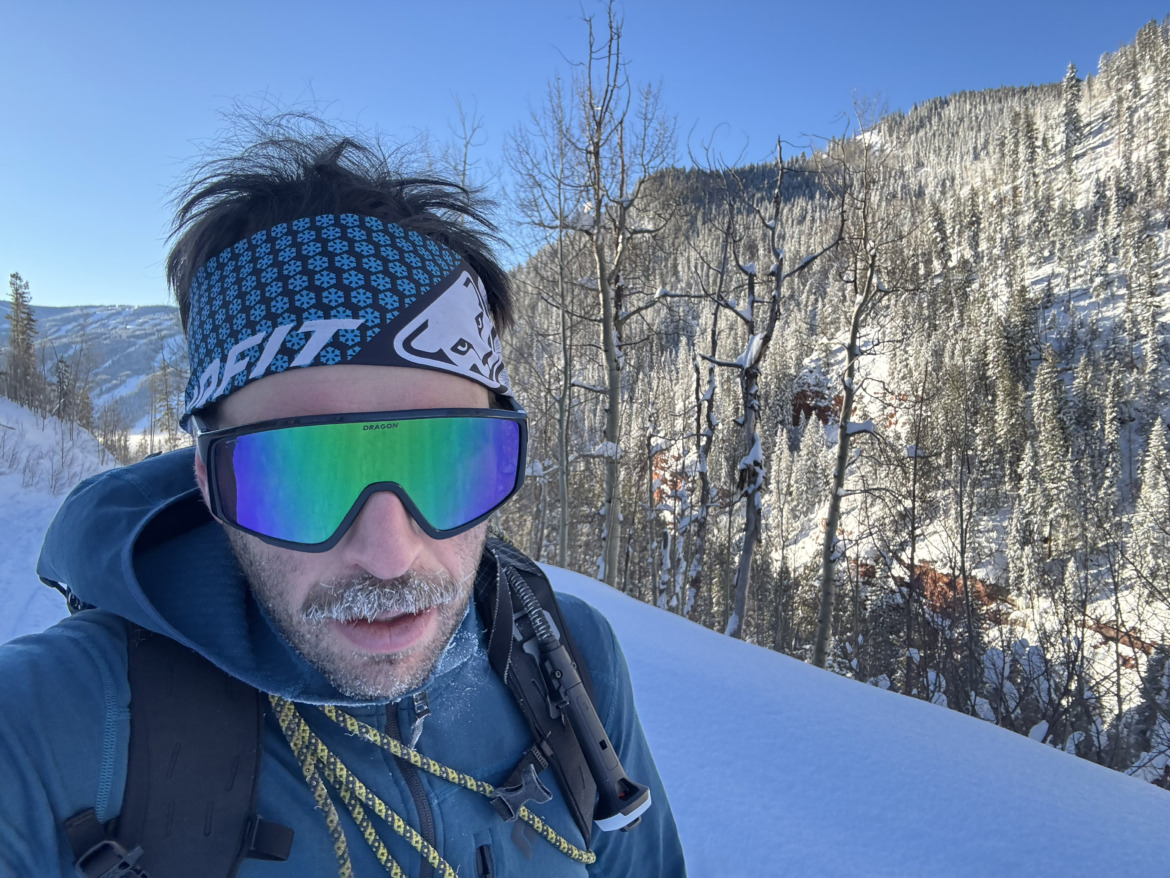
Bergen Tjossem is a ski fanatic, conservation professional, and nature nerd based in Vail, Colorado. His life and career have centered around protecting the natural environment and public lands that raised him, but as Ed Abbey put it, “It is not enough to fight for the land; It is even more important to enjoy it.” So when he’s not working his day job, you’ll find Bergen ski touring before dawn, ice climbing in the dark, running trails until his legs fall off, skiing 13er’s with his friends, or making the world’s best pizza with his wife, Rachel. You can find him on Instagram.
